
 Facebook
 X
X LinkedIn
 Forward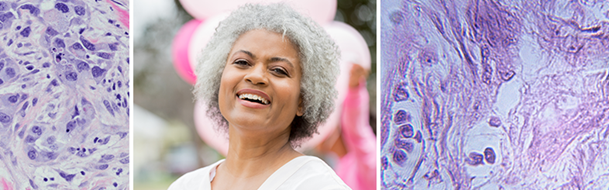
Breast cancer (one of the most common types afflicting women) afflicts an estimated 288,000 women or more in the United States each year. If detected and diagnosed accurately and early enough, chances of patient survival rise dramatically. Therefore, it is critical for pathologists to have the skills to diagnose accurately based on testing results.
Whether refreshing or expanding their knowledge, pathologists can count on the CAP to help them stay current with ongoing diagnostic learning and other skills related to breast pathology. The CAP offers several continuing medical education (CME) options, including real-time and online courses.
Online Courses
Breast: A Roadmap towards the “Perfect” Pathology Report of Post-Neoadjuvant Therapy Resections
Learn indications of neoadjuvant therapy (NAT) and important chemotherapeutic regimes, as well as recommendations for assessing post-NAT resection specimens and predictors of complete pathologic response.
Course Authors:

Uma Krishnamurti, MD, MBBS, PhD, FCAP
Yale University

Marina Mosunjac, MD, FCAP
Emory University
Learn More
Papillary Lesions of the Breast
Review the diagnostic criteria and the clinical significance of various benign, in situ, and malignant papillary lesions of the breast in both core needle biopsy specimens and surgical excision specimens. In addition, learn about the uses and limitations of IHC in resolving diagnostic problems in papillary lesions of the breast.
Course Author:

Laura Collins, MD, FCAP
Beth Israel Deaconess Medical Center
Learn More
Common Diagnostic Challenges on Breast Core Needle Biopsy
Radiologic pathologic concordance in breast core needle biopsy is important, as is understanding common differential diagnostic challenges. Learn about pitfalls in the diagnosis of triple-negative tumors and the ramifications of misclassification as primary breast carcinomas in an era of neoadjuvant systemic therapy.
Course Author:
Laura Collins, MD, FCAP
Beth Israel Deaconess Medical Center
Learn More
Pitfalls in the Use of IHC in Diagnostic Breast Pathology
Through a series of cases, learners will recognize pitfalls in the use of immunohistochemistry in diagnostic breast pathology like myoepithelial stains and E-cadherin, understand the immunohistochemical staining patterns of various papillary lesions, and review markers that aid in the work-up of an unknown primary tumor when breast carcinoma is a consideration.
Course Author:

Timothy D’Alfonso, MD
Memorial Sloan Kettering Cancer Center
Learn More
Diagnosing Breast Lesions
Immunohistochemical studies assist the diagnostic evaluation of breast lesions. To avoid misdiagnosis, pathologists must recognize potential pitfalls in interpretation from common and rarer (but often more challenging) sources of diagnostic error. Learn correlative morphologic features to help interpret confusing or indeterminate IHC results. Learn about the appropriate diagnostic settings where these IHC studies may be helpful, as well as their uses and limitations in daily practice.
Course Authors:

Melinda Lerwill, MD, FCAP
Massachusetts General Hospital

Yunn-Yi Chen, MD, PhD, FCAP
University of California, San Francisco (UCSF) Medical Center
Learn More
HER2 Focused Update
In 2018, the American Society of Clinical Oncology (ASCO) and the CAP developed a focused update on human epidermal growth factor receptor 2 (HER2) testing in breast cancer. The update endorses 2013 HER2 testing guidelines while addressing subsequent questions related to HER2 testing raised by the clinical community and in the literature. This activity addresses these questions and illustrates the practical application of this update.
Course Authors:

David G. Hicks, MD, FCAP
University of Rochester Medical Center

Monisha Bhanote, MD, FCAP, ABOIM, YMTS, CCMS
Private Practice, Florida

Huina Zhang, MD, PhD, FCAP
University of Rochester Medical Center
Learn More
Diagnosing and Classifying Hyperplasia, Atypical Hyperplasia, and Low-Grade DCIS
This course provides an overview of how to properly distinguish usual ductal hyperplasia from atypical ductal hyperplasia and low-grade ductal carcinoma in situ, as well as flat epithelial atypia from various columnar cell lesions. It also discusses the clinical significance and current management of these diagnoses.
Course Author:
Yunn-Yi Chen, MD, PhD, FCAP
University of California, San Francisco (UCSF) Medical Center
Learn More
Invasive Breast Cancer and Risk of Recurrence Testing
Genomic testing for breast cancer recurrence risk is an important part of clinical breast cancer care. This course discusses risk of recurrence testing used in the diagnosis and treatment of invasive breast cancer while reviewing statistics on cancer recurrence and clinical outcomes with chemotherapy, including data from the TAILORx trial. The course discusses the benefits and concerns of risk of recurrence testing for patients, the different types of multigene assays and distinctions between them, and IHC and protein profiling of cancer. The course includes ASCO and NCCN clinical practice guidelines for use of biomarkers to guide decisions on adjuvant systemic therapy for women with invasive breast cancer.
Course Authors:

David G. Hicks, MD, FCAP
University of Rochester Medical Center

Bradley M. Turner, MD, MPH, MHA, FCAP
University of Rochester Medical Center
Learn More
Contact Us
If you have any questions, please contact the CAP: 800-323-4040 option #1
Email: [email protected]
Or visit: https://info.cap.org/ap3/